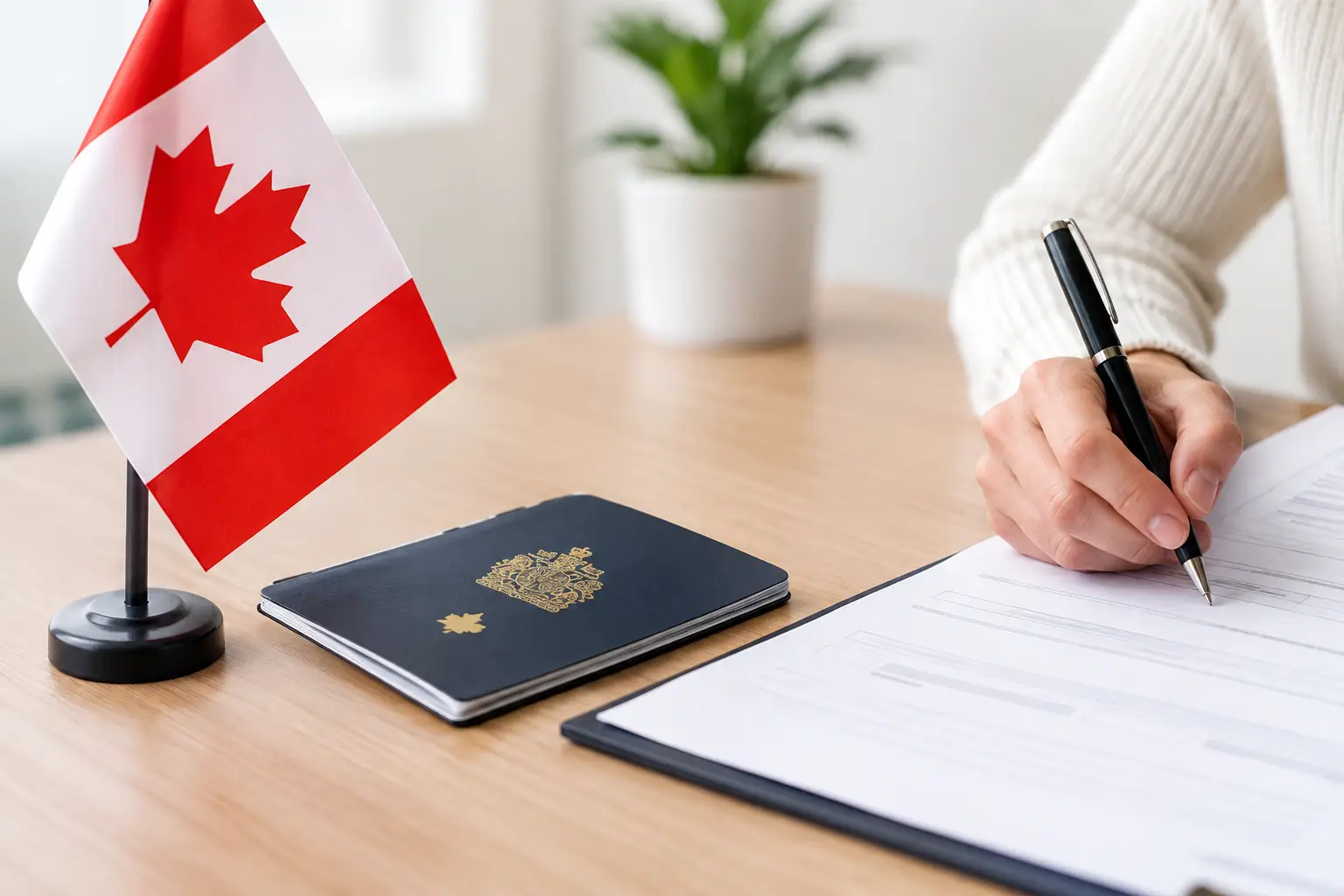
A Canadian citizenship application is the final formal step after years of building a life in Canada. For many permanent residents, it represents security, a stronger sense of belonging, and the ability to participate fully in Canadian civic life. But a citizenship application is not simply a form to submit when you have held permanent resident status for a certain number of years. The details of your travel history, tax filing obligations, identity documents, and personal circumstances all matter.
A careful application begins with eligibility, not paperwork. Taking time to confirm the rules before submitting can prevent delays, returned applications, or a refusal that may have been avoidable with better preparation.
Who can make a Canadian citizenship application?
In most adult cases, you must first be a permanent resident of Canada. Your PR status cannot be under review for immigration fraud or removal-related concerns, and you must not be subject to an unenforced removal order.
You must also meet the physical presence requirement. Generally, you need at least 1,095 days of physical presence in Canada during the five years immediately before you sign your application. This is one of the most important parts of the process because the calculation is not always as straightforward as it appears.
Time spent in Canada before becoming a permanent resident may count in some situations. Days spent in Canada as a temporary resident or protected person can usually be credited at half-day value, up to a maximum credit of 365 days. Time outside Canada generally does not count, although limited exceptions can apply in specific circumstances.
You may also need to have filed Canadian income taxes for at least three taxation years within the five-year eligibility period, if you were required to file. Filing taxes and meeting citizenship tax requirements are related but not identical questions. An applicant should not assume that having a tax return prepared automatically confirms citizenship eligibility.
Adult applicants between ages 18 and 54 generally need to show adequate English or French language ability and take the citizenship test. They must also meet the knowledge requirement. Applicants outside that age range may be exempt from the language and test requirements, though other eligibility rules still apply.
Finally, criminal history, charges, probation, incarceration, immigration misrepresentation findings, and certain prohibitions can affect whether you can apply now. A past issue does not always mean citizenship is impossible. It does mean the timing and strategy should be assessed carefully before filing.
Calculate physical presence before you apply
The physical presence calculation is often where otherwise qualified applicants run into trouble. Short trips to visit family, business travel, vacations, border crossings, and periods spent outside Canada while waiting for immigration decisions can add up quickly.
Start by creating a complete travel record for the full five-year eligibility period. Include every date you left Canada and returned, even for brief trips. Compare your record against passports, boarding passes, travel confirmations, employment records, school records, and entry history where available. If you have renewed a passport, include trips reflected in both the old and new documents.
It is wise to apply with more than the minimum 1,095 days when possible. Applying exactly at the threshold can be appropriate if your records are complete and the calculation is clear. However, an unrecorded trip or an incorrectly entered date can place you below the requirement. Waiting until you have a reasonable buffer may offer more protection, particularly for applicants with frequent international travel.
Do not guess at dates. If a date is uncertain, investigate it before submitting the application. Accuracy matters more than making the timeline look simple.
Prepare documents that tell a consistent story
A citizenship file should give Immigration, Refugees and Citizenship Canada, or IRCC, a clear and consistent picture of your identity, status, residence, and eligibility. Document requirements can differ by applicant type, age, and the application method in use at the time of filing, so always work from the current IRCC instructions.
Most applicants will need proof of permanent resident status, identity documents, passport or travel document copies covering the relevant period, photographs that meet the required specifications, and evidence of language ability when applicable. You may also need certified translations for documents that are not in English or French.
Your application must also include a detailed personal history and address history. These sections deserve the same care as the physical presence calculation. Gaps, overlapping dates, unexplained unemployment, or an address that conflicts with another document can lead to questions from IRCC.
If a document is unavailable, do not simply leave the issue unaddressed. Determine whether IRCC accepts an alternative document and provide a clear explanation where appropriate. The right response depends on the situation. A lost passport, a name change, an expired foreign identity document, or a discrepancy in dates may require supporting records and a carefully prepared explanation.
Special circumstances need individual review
Some citizenship applications require additional planning. This may include cases involving a minor child, a child applying without a Canadian-parent applicant, adoption, a parent with sole custody, a change of name, a previous citizenship refusal, lengthy absences, or criminal and court history.
For minors, the requirements can differ depending on age and whether a parent is applying at the same time. Families should avoid assuming that one parent’s eligibility automatically resolves every issue for a child.
Applicants with a past charge, conviction, probation order, or ongoing court matter should seek qualified advice before submitting. The key question is often not only what happened, but whether a prohibition applies on the date of application and whether enough time has passed. Filing too early can create unnecessary risk.
Submit carefully and stay engaged after filing
Citizenship applications may be submitted through the format IRCC makes available for your category, which can include online or paper processes. Before submission, review every answer against your supporting documents. Check names, dates of birth, passport numbers, addresses, travel dates, email addresses, and signatures. A small inconsistency can create a larger administrative problem later.
After submitting, keep copies of the full application package and proof of payment. Monitor the email address and online account associated with your file, including spam and junk folders. IRCC may request additional documents, clarification, fingerprints, an interview, or updated information. Respond by the deadline and provide exactly what is requested.
A request from IRCC is not necessarily a sign that your application will be refused. Often, it means an officer needs information to complete the assessment. Still, the response should be organized, accurate, and consistent with what was already submitted. If the request raises concerns about physical presence, prohibitions, identity, or possible misrepresentation, obtain professional guidance before responding.
Prepare for the test and ceremony
Applicants who must take the citizenship test are assessed on Canada’s history, geography, political system, laws, symbols, and rights and responsibilities. The goal is not to memorize isolated facts. It is to understand the basic framework of the country you are asking to join as a citizen.
Read the official study materials closely and give yourself enough time to prepare. If IRCC schedules an interview, review your application, travel history, and documents beforehand. Be ready to explain your residence and personal history clearly.
The citizenship ceremony is the final step for approved applicants. At the ceremony, you take the Oath of Citizenship and become a Canadian citizen. Afterward, you can apply for a Canadian passport if needed. Until citizenship is granted, maintain your permanent resident status requirements and keep IRCC informed of significant changes, including a new address or relevant legal issue.
Citizenship should feel like a milestone, not a paperwork gamble. If your records are complex, your travel history is extensive, or you are unsure whether a past issue affects eligibility, you do not have to figure it out alone. Novica Immigration can help you assess the facts, organize the evidence, and submit an application that reflects your story accurately and responsibly.