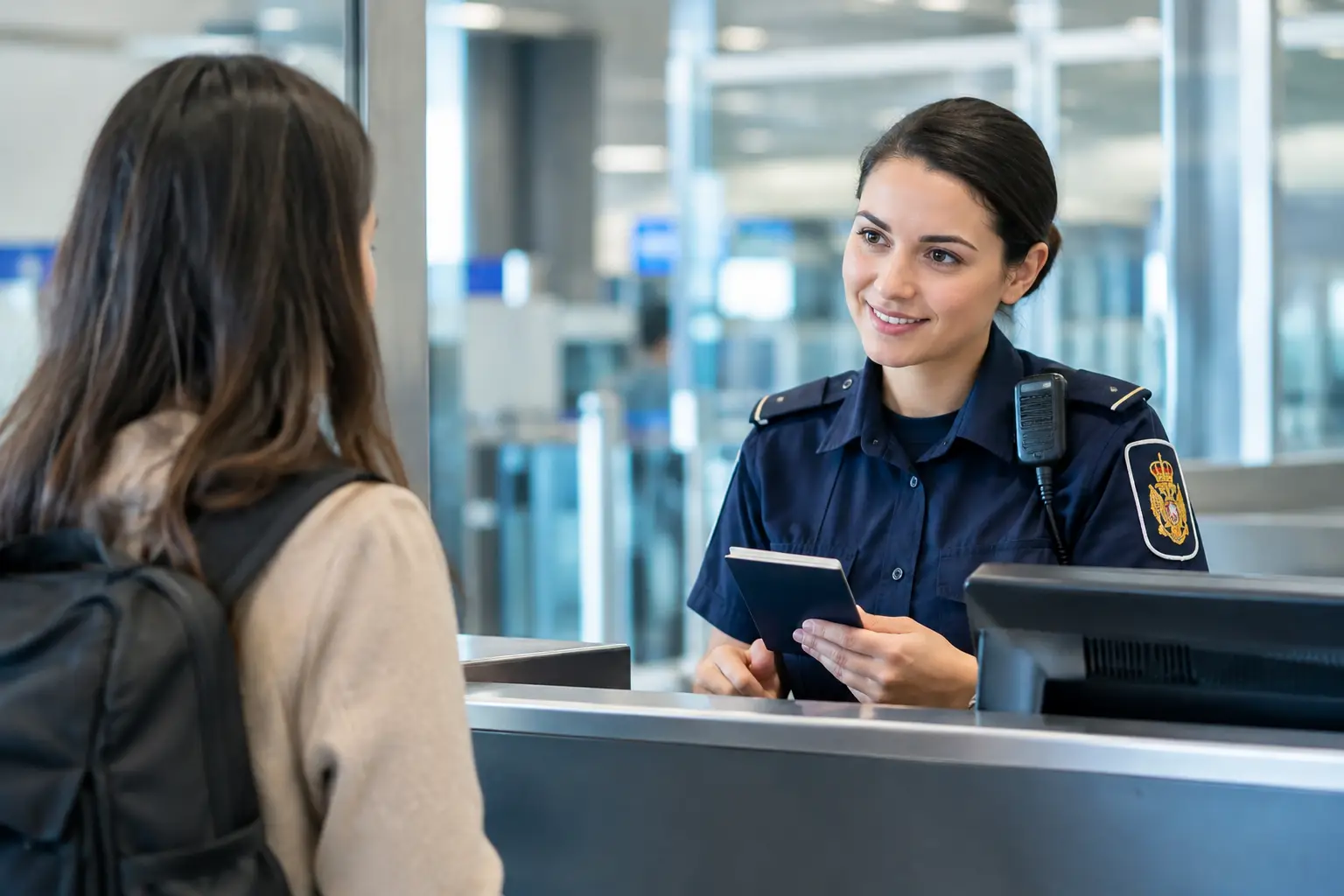
A visa, eTA, study permit approval, work permit approval, or Confirmation of Permanent Residence gets you to Canada. It does not make the conversation at the airport or land border optional. Interviews with CBSA upon landing are the final point at which an officer decides whether you may enter Canada and, where applicable, issues or confirms your immigration document.
That can feel intimidating, especially after months of planning, document collection, and waiting. Most travelers who are prepared and truthful have a straightforward interaction. The goal is not to memorize a script. It is to understand what the officer needs to confirm, carry the right evidence, and answer directly.
Why CBSA interviews happen at the border
The Canada Border Services Agency, or CBSA, is responsible for examining people and goods at the border. An officer may ask questions at a primary inspection booth, in the arrivals area, or during a secondary examination. Being sent to secondary inspection does not automatically mean there is a problem. It can simply mean the officer needs more time to review documents, issue a permit, verify information, or complete the permanent resident landing process.
The officer is assessing whether your purpose of travel is consistent with your documents and whether you meet the requirements to enter Canada. Their questions can also address admissibility, including prior immigration issues, criminal history, medical concerns where relevant, or inconsistencies in your application.
For temporary residents, the central question is usually whether you are a genuine visitor, student, or worker who will comply with the conditions of your stay. For new permanent residents, the officer generally confirms identity, reviews the information supporting the landing, and verifies that no material circumstances have changed since approval.
A calm, complete answer helps. So does recognizing that the officer has discretion at the border. Approval from Immigration, Refugees and Citizenship Canada, known as IRCC, is significant, but it is not a reason to be casual or unprepared when you arrive.
What to expect during interviews with CBSA upon landing
Questions vary based on your status, travel history, and the information available to the officer. Many interviews are brief. Others take longer because a document needs review or an answer raises a follow-up question.
You may be asked where you will live, how long you intend to stay, who you are traveling with, how you will support yourself, and what you plan to do in Canada. Officers may also ask about goods you are bringing, alcohol, tobacco, food, commercial items, or cash and monetary instruments totaling CAD $10,000 or more. These must be declared.
Answer the question asked, then pause. Offering a long explanation before it is requested can create confusion. At the same time, do not minimize or hide facts. A past refusal, a prior overstay, an arrest, family in Canada, or a plan that differs from what was stated in your application should not be concealed. Misrepresentation can have serious consequences, including refusal of entry and a potential five-year ban from Canada.
If you do not understand a question, say so respectfully. Ask the officer to repeat or clarify it. Do not guess.
If you are entering as a visitor
A visitor should be ready to explain the purpose and expected length of the trip. Depending on the circumstances, helpful evidence may include a return or onward travel plan, hotel reservation or host address, proof of funds, travel itinerary, and documentation showing your ongoing ties outside Canada.
Having family members in Canada is not a problem by itself. The issue is whether your overall circumstances support a temporary visit. If you say you are visiting for two weeks but arrive with extensive personal belongings and no clear plan to leave, an officer may reasonably ask more questions.
If you are arriving to study
Students should carry their passport, letter of introduction approving the study permit, letter of acceptance from the designated learning institution, proof of tuition payment if available, proof of financial support, and the address of their intended accommodation. A minor should also carry the documents related to their custodian, if a custodian arrangement applies.
The officer may ask about your program, school, start date, funding, and plans after completing your studies. Your answers should match your application. You do not need a perfect career speech, but you should be able to explain why the program makes sense for your education and future plans.
At the border, confirm the study permit carefully before leaving the inspection area. Check your name, passport number, school details where shown, and expiry date. If something appears incorrect, raise it immediately.
If you are arriving to work
Workers should bring the approval letter or other relevant authorization, job offer, employment contract, supporting documents connected to the work permit application, and evidence of qualifications if appropriate to the role. If your permit is employer-specific, be prepared to identify the employer, position, work location, and anticipated start date.
A work permit is not permission to work for any employer in any role. Read the conditions printed on the document once it is issued. If your job, employer, or eligibility changed after the application was submitted, obtain professional advice before travel when possible. A changed fact can affect the border examination.
If you are becoming a permanent resident
New permanent residents should travel with their passport and their valid permanent resident visa and Confirmation of Permanent Residence documents, if these were issued as paper documents. Bring supporting records that may be relevant to your case, particularly if there has been a recent change in marital status, family composition, criminal history, health, or your ability to meet program requirements.
You must tell the officer about changes that occurred after approval. For example, a marriage, divorce, birth of a child, criminal charge, or a change related to eligibility may need to be addressed before landing. Failing to disclose a material change can put permanent resident status at risk.
Permanent residents also need to provide a Canadian residential address for delivery of the first PR card, if they have one. If you do not yet have a permanent Canadian address, ask about the process for providing it later. Do not provide an address where you cannot reliably receive mail.
Documents to keep in your carry-on bag
Checked luggage is the wrong place for immigration documents. Keep originals and a well-organized set of supporting materials with you, preferably in a folder that allows you to find a document quickly.
For most travelers, that folder should include the following:
- Passport and any current Canadian visa, eTA-related travel record, or approval letter
- Letter of introduction, Confirmation of Permanent Residence, or other immigration approval documents
- Address and contact details for your Canadian accommodation, school, employer, or host
- Proof of funds and key evidence supporting the purpose of travel
- Marriage, birth, custody, or name-change documents when relevant to your application or accompanying family members
- A list of goods accompanying you and goods to follow, if you are settling in Canada as a new permanent resident
Carry documents for each family member, including children. If a child is traveling with one parent or another adult, a consent letter and supporting custody documentation may be necessary. Border officers take child-travel safeguards seriously.
Paper copies remain useful even when documents are available on your phone. Airport connectivity, a low battery, or a misplaced device should not prevent you from showing critical evidence.
How to answer clearly without creating concern
The best approach is simple: be accurate, consistent, and respectful. Your answers should align with your immigration application and current situation. If an officer asks why you are entering Canada, identify your status and purpose in plain language: “I am arriving to begin my two-year program at [school]” or “I am visiting my sister for three weeks and returning to my job in the United States on [date].”
Avoid jokes about working without authorization, staying permanently when entering as a visitor, or bringing prohibited goods. Border interviews are official examinations, not casual conversations. Also avoid presenting documents that you have not read. Know the start date of your program or job, where you will stay, and the basic financial plan behind your trip.
If you are referred to secondary inspection, remain patient. You may be asked to wait while the officer reviews records or consults another department. You can ask what documents would help answer a concern, but do not argue or become confrontational. A respectful approach protects your ability to explain the facts clearly.
When preparation should begin before you travel
Do not wait until the flight or drive to review your application. Compare your approval documents against your current circumstances a few weeks before departure. Check passport validity, travel dates, family details, school enrollment, employment terms, financial evidence, and any conditions attached to your approval.
This review matters most if something has changed. A visitor visa issued months ago may not reflect a recent refusal in another country. A student may have deferred a program start date. A worker may have a new employer. A permanent resident applicant may have married or had a child after receiving approval. Each situation requires a different response, and sometimes travel should be postponed until the change is addressed properly.
For complex circumstances, individualized advice before boarding can prevent a stressful border encounter. Novica Immigration helps clients organize supporting documents, understand the conditions of their status, and prepare for the practical questions that arise when entering Canada. No representative can guarantee admission, but careful preparation gives you a clearer, more credible way to present your case.
The border interview is one conversation, not a test of your worthiness to build a life in Canada. Bring the facts, bring the documents, and give yourself time to answer with honesty and composure.