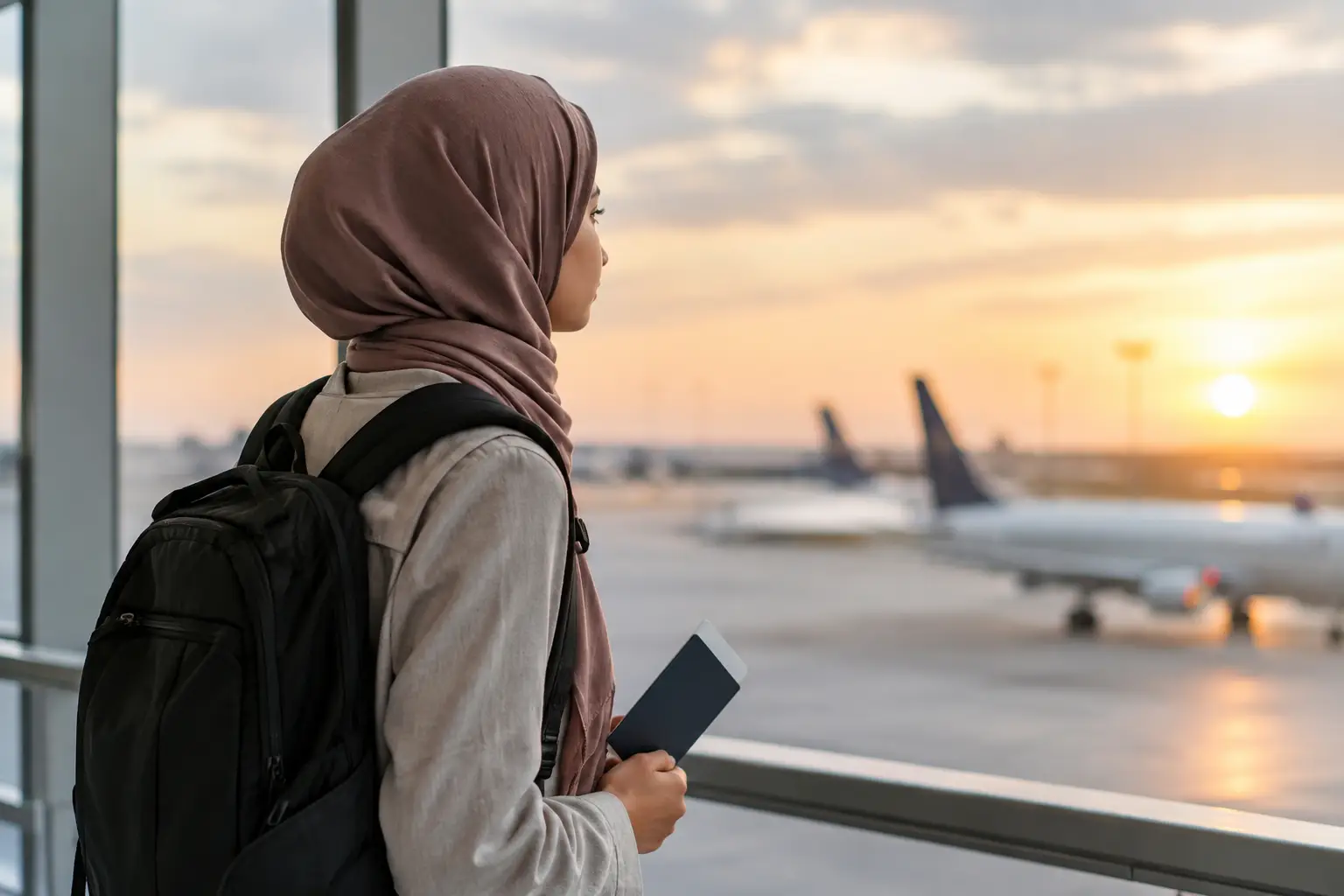
A plane ticket home can carry consequences far beyond a short visit. Can a refugee travel back to their home country? In some situations, it may be physically possible, but for a person protected by Canada because they feared persecution, torture, risk to life, or cruel treatment there, the decision can put their status in Canada at serious risk.
The central issue is not simply whether Canada will let you board a flight. It is whether your travel suggests that you no longer need Canada’s protection or have chosen to rely again on the protection of the country you fled. Canadian immigration authorities may examine the purpose of the trip, the documents used, how long you stayed, and the facts behind your original refugee claim.
This is one area where a well-intended family decision can create an immigration problem that is difficult to reverse. Before making travel plans, obtain individualized legal advice based on your status and the reason for travel.
Why returning home can affect refugee protection
Refugee protection is granted because Canada accepted that a person faced a serious risk in a particular country. Returning to that country may appear inconsistent with the fear described in a refugee claim or protection application.
Under Canadian immigration law, the government can seek to end refugee protection through a process known as cessation. One possible ground is that a protected person has voluntarily re-availed themselves of the protection of their country of nationality. Another is that they have voluntarily re-established themselves in that country.
In plain language, Canadian authorities may ask: if you needed Canada’s protection from your home government, why did you return there, use that government’s passport, or ask that government for assistance?
A return trip does not automatically mean that refugee protection will end. The facts matter. A brief trip to see a seriously ill parent may be viewed differently from repeated vacations, a long stay, purchasing property, working there, or moving back. Still, a compassionate reason does not guarantee that there will be no immigration consequences. The trip can raise questions that must be answered with evidence.
Can a refugee travel back to their home country after becoming a permanent resident?
Yes, a person who received permanent residence after being recognized as a protected person may still be able to travel. However, permanent residence does not remove the risk created by returning to the country from which protection was sought.
This point surprises many people. A permanent resident may meet the residency obligation, hold a valid PR card, and still face a cessation issue because of travel to their home country or use of that country’s passport. If cessation is established, it can also lead to a loss of permanent resident status and removal from Canada.
A PR card is proof of status and a travel document for commercial transportation to Canada. It is not confirmation that travel to your former home country is safe from an immigration perspective. Similarly, an application to renew a PR card or obtain a permanent resident travel document can lead to questions about your travel history. Accuracy and consistency in all forms and supporting documents are essential.
Using a home-country passport can also create risk
Traveling to the home country is not the only concern. Applying for, renewing, or using a passport from the country that caused the original fear may be treated as evidence that a person sought that country’s protection again.
There can be practical reasons someone feels they need a national passport. A foreign destination may require one for entry, an airline may have document requirements, or a family emergency may create intense pressure. But practical convenience is not the same as a legal justification under refugee protection rules.
Refugees and protected persons in Canada may be eligible for a Refugee Travel Document, which is intended for travel outside Canada. It generally cannot be used to travel to the person’s country of nationality. The document itself is not a solution for a trip back home.
Do not assume that renewing a passport without traveling, or traveling on a passport without seeking consular help, will be viewed as harmless. The legal analysis can be highly fact-specific. It is better to understand the risk before submitting a passport application, visiting a consulate, or booking travel.
Different status, different questions
The answer depends partly on where you are in the immigration process.
A refugee claimant whose case is still pending should be especially cautious. Leaving Canada can affect the claim process, hearing attendance, admissibility, and the practical ability to return. Going back to the country named in the claim can seriously undermine the credibility of the fear asserted.
A protected person or Convention refugee who has not yet become a permanent resident may face a cessation application that puts their protection at stake. Their particular travel history, explanations, and supporting evidence may become central to the case.
Permanent residents who were previously protected persons need to consider both their PR status and the possibility of cessation. Time spent outside Canada may also create a separate residency obligation issue, although a short trip alone will not necessarily cause that problem.
Canadian citizens have the legal right to enter Canada and are not in the same position as a protected person or permanent resident facing cessation. Even so, a former refugee should think carefully about personal safety, the risk of detention or surveillance abroad, and whether past travel history or statements are consistent with prior immigration applications. If a citizenship application is still in progress, travel facts that conflict with a previous refugee claim can require careful explanation.
When an urgent return may feel unavoidable
Family emergencies are real. A parent may be critically ill, a child may need support, or there may be a funeral, inheritance matter, or urgent property issue. These circumstances deserve compassion, but they should not be handled casually.
If travel is genuinely necessary, speak with a qualified Canadian immigration professional before acting whenever possible. The advice should address your exact immigration history, the risk identified in your claim, whether the feared actor remains in power or able to harm you, the reason for travel, and the documents you may need.
You may need to preserve evidence showing why the trip was necessary and limited. Depending on the circumstances, this could include medical letters, death certificates, proof of the relationship, travel records, a clear itinerary, and evidence that you stayed only as long as required. Evidence does not eliminate risk, but it may be critical if your travel is questioned later.
Avoid overstating or inventing reasons for travel. Immigration records can be compared across applications, border entries, passport stamps, social media, employment records, and declarations. Honest, consistent documentation is always safer than an explanation created after the fact.
What to review before any travel decision
Before leaving Canada, take time to review the full picture rather than focusing only on whether you can obtain a ticket or enter another country. A careful review should cover:
- your current Canadian status, including whether you are a claimant, protected person, permanent resident, or citizen;
- the basis of your original claim and the specific risk you described;
- the proposed destination, purpose, length, and frequency of travel;
- whether you plan to use, renew, or obtain a home-country passport; and
- the documents and evidence available to support an urgent or compassionate reason.
It is also wise to consider alternatives. Could another relative handle a property matter? Can a hospital provide information remotely? Is it possible to meet family members in a third country? These alternatives may not be emotionally satisfying, but they can reduce immigration risk while still helping you respond to an urgent situation.
Get advice before the decision becomes a problem
The consequences of returning to a home country may not appear at the airport. Questions can arise years later during a PR card renewal, a travel document application, a citizenship application, a border examination, or an immigration enforcement proceeding. By then, documents may be harder to obtain and memories less clear.
At Novica Immigration, the approach is to look at the facts before a client takes a step that could affect their future in Canada. You do not have to figure out a high-stakes travel decision alone. A clear review before you leave can help you understand the risk, prepare the right records, and make a decision that respects both your family circumstances and the protection you worked hard to secure.