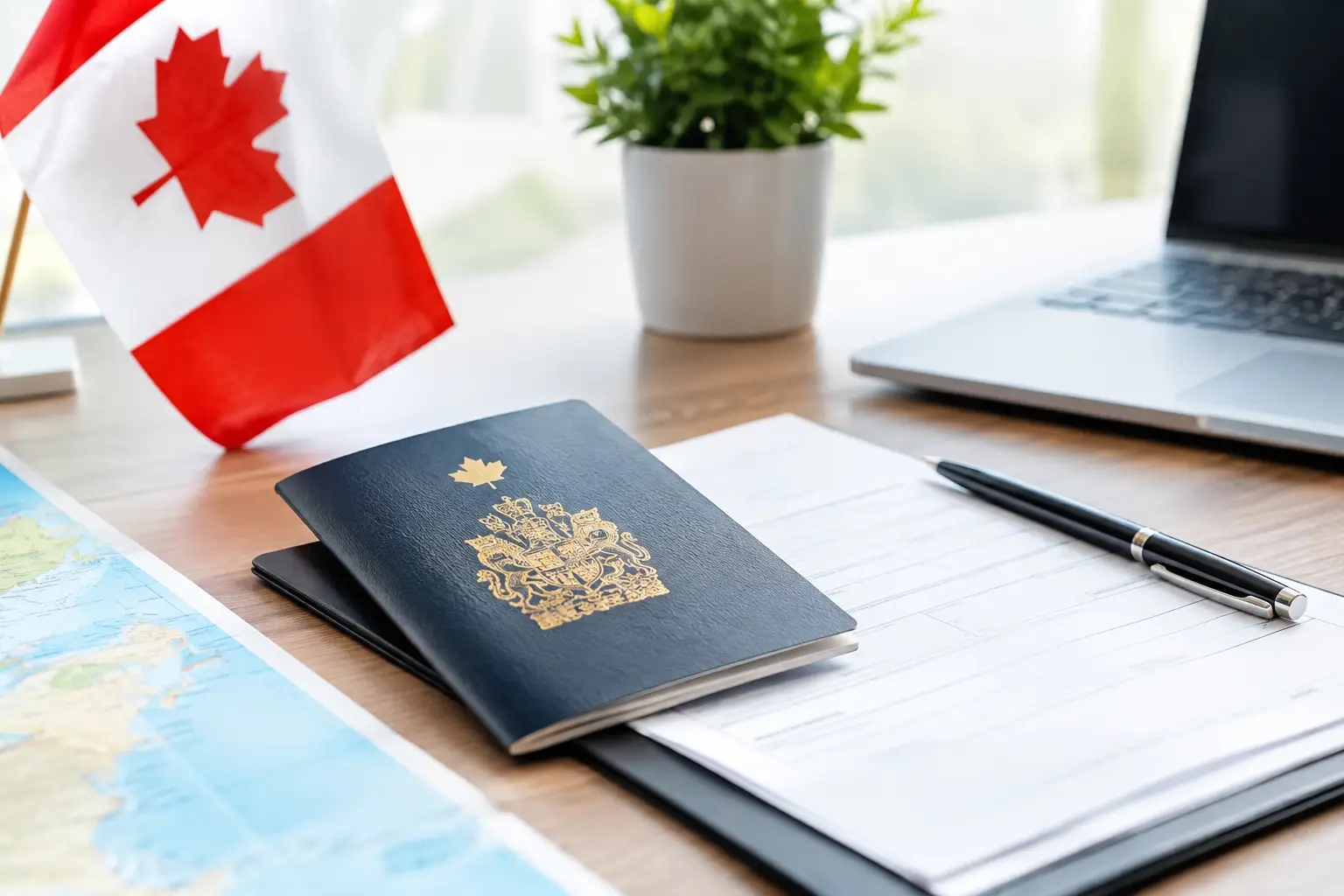
A missing employment letter, an unexplained bank deposit, or a passport that expires too soon can delay an application that otherwise looks strong. This Canadian immigration document guide is designed to help you prepare records with purpose, whether you are planning to study, work, visit family, apply for permanent residence, or sponsor a loved one.
Canadian immigration applications are document-driven. Officers assess eligibility based on the forms and evidence in the file, not only on your future plans in Canada. The goal is not to submit every paper you have. It is to provide clear, credible evidence that answers the questions specific to your immigration pathway.
Start With the Right Application Strategy
Your document checklist should follow your immigration objective. A visitor visa application may focus on your travel purpose, financial situation, and ties outside Canada. A study permit application must show why the program makes sense for your education and career, how it will be funded, and whether you meet the requirements for the school and program.
For work permits, the required evidence depends heavily on the work permit category. Some applications require an employer-specific offer and supporting employer documents, while others may be open work permit applications connected to a spouse, graduation, or another qualifying situation. Permanent residence applications through Express Entry, a Provincial Nominee Program, or family sponsorship each have their own evidence rules and timing requirements.
This is why generic online checklists can be helpful starting points but are not enough on their own. Two applicants may apply through the same stream and still need different supporting documents because of their work history, family composition, travel history, finances, prior refusals, or country of residence.
Canadian Immigration Document Guide: Build Your Core File
Most applicants will need a foundation of personal identity and civil-status documents. Gather these early, even before you are ready to submit. Some records take weeks or months to obtain, replace, translate, or legalize.
Your core file commonly includes a valid passport, identity documents, birth certificate, marriage certificate if applicable, divorce or death certificates for previous spouses where relevant, and documents for accompanying children. If a child is traveling or immigrating with only one parent, custody records or consent documentation may also be needed.
Check each document carefully. Names, dates of birth, and places of birth should be consistent across your passport, forms, diplomas, employment records, and civil documents. A difference is not always a problem, especially when names changed after marriage or records follow different local conventions. However, unexplained discrepancies can create questions. Keep legal name-change documents and prepare a simple explanation when needed.
Documents not issued in English or French generally require translation. Translation requirements can vary depending on the document and the application instructions. Do not assume a friend or relative can translate a document simply because they are fluent. Follow the specific instructions for certified translations, affidavits, and copies before uploading anything.
Keep a Document Inventory
Create a private folder system with a master inventory. For each document, record the document name, the person it relates to, the issuing authority, issue date, expiration date if applicable, translation status, and whether it has been uploaded. Use clear file names, such as “Smith_Jane_Passport_2026” or “Garcia_Miguel_EmploymentLetter_ABCCompany.”
This simple step reduces last-minute confusion and helps ensure that an older version of a document is not submitted by mistake. It is especially useful for family applications, where one missing item from a spouse or dependent child can hold up the full file.
Prove Your Purpose and Your Eligibility
Every application needs evidence that supports its central story. The forms state what you are requesting. Your documents should show why you qualify.
For a visitor visa, that may include an invitation letter, a travel plan, evidence of family or professional obligations outside Canada, proof of employment or business ownership, and financial records. The strength of the application comes from how these pieces work together. An invitation letter alone does not establish that a person is likely to leave Canada at the end of an authorized stay.
For a study permit, useful evidence may include a letter of acceptance, tuition payment records, proof of funds, academic transcripts, diplomas, language test results where relevant, and a study plan. A thoughtful study plan can explain how the Canadian program connects to your prior education, current career, and realistic plans after graduation. It should be personal and fact-based, not a copied statement filled with broad promises.
For skilled-worker permanent residence applications, employment evidence often requires particular attention. Reference letters should accurately confirm your position, dates of employment, hours, salary or benefits where required, and a detailed description of duties. Job titles alone are not enough when an officer needs to assess whether your work experience fits the occupational requirements of a program.
For family sponsorship, relationship evidence should be organized to show that the relationship is genuine and continuing. The appropriate evidence depends on the relationship and the couple’s circumstances. Shared financial records, communication history, photographs, travel records, household documents, and letters from people who know the relationship may all have a role. Quality and context matter more than uploading hundreds of repetitive screenshots.
Financial Documents Need Context, Not Just a Balance
Financial evidence is one of the most misunderstood parts of a Canadian immigration application. A high account balance can be helpful, but it does not automatically answer where the money came from, whether it is available for the applicant’s use, or whether the financial plan is realistic.
Provide bank statements for the period requested in the application instructions, along with supporting records for significant deposits. If funds came from employment income, sale of property, an investment, a gift, or a sponsor, document the source clearly. A gift can be acceptable in some situations, but it should be genuine, traceable, and supported by records that explain the relationship and transfer.
If someone else is paying for your studies or travel, include evidence of that person’s financial ability as well as a letter explaining the support. For a study permit, consider the full picture: tuition, living expenses, travel, and the needs of any accompanying family members. A plan that only covers the first payment may raise concerns even if the initial bank balance looks adequate.
Address Gaps, Refusals, and Complicated History Directly
Applicants sometimes hesitate to disclose a prior refusal, a gap in work history, a previous marriage, or a period of unauthorized status in another country. That hesitation can lead to a more serious problem if the information later appears in immigration records or supporting documents.
Answer all questions truthfully and completely. If an explanation is needed, provide one that is calm, chronological, and supported by evidence where possible. Do not guess, minimize, or submit altered documents. Misrepresentation can have severe immigration consequences, including a refusal and a period of inadmissibility.
A prior refusal does not automatically mean a new application will fail. It does mean the new application should address the reason for refusal rather than repeat the same evidence. Sometimes the best next step is not to reapply immediately, but to improve the underlying facts, gather stronger records, or choose a more suitable immigration pathway.
Review Before You Submit
Before submission, compare every form answer against the documents in your file. Dates should match. Employment and address histories should not contain unexplained gaps. Family information should be complete. Passports should be valid for the period needed, and police certificates, medical examinations, biometrics, and other time-sensitive documents should be obtained at the correct stage of the process.
Read the document upload instructions carefully. Some portals have file-size limits, naming restrictions, or specific places for optional explanation letters. Combine documents only when it makes the file easier to review, and make sure every scan is legible, complete, and correctly oriented.
At Novica Immigration, document preparation is treated as more than administrative work. It is part of the legal strategy for presenting a clear, consistent application. Professional fees for representation are separate from government fees and third-party costs, and the scope of support should be clear before work begins.
You do not have to figure out every requirement alone. Start by collecting the records that tell your real story, then make sure the application gives those records the structure and context an officer needs to understand them.