Category: Canada Immigration

  • PR Card Renewal Requirements Made Clear

    PR Card Renewal Requirements Made Clear

    An expired PR card can make an upcoming trip, a job requirement, or a family visit feel far more stressful than it needs to be. Understanding the PR card renewal requirements early gives you time to confirm your residency days, gather clear evidence, and avoid last-minute travel problems.

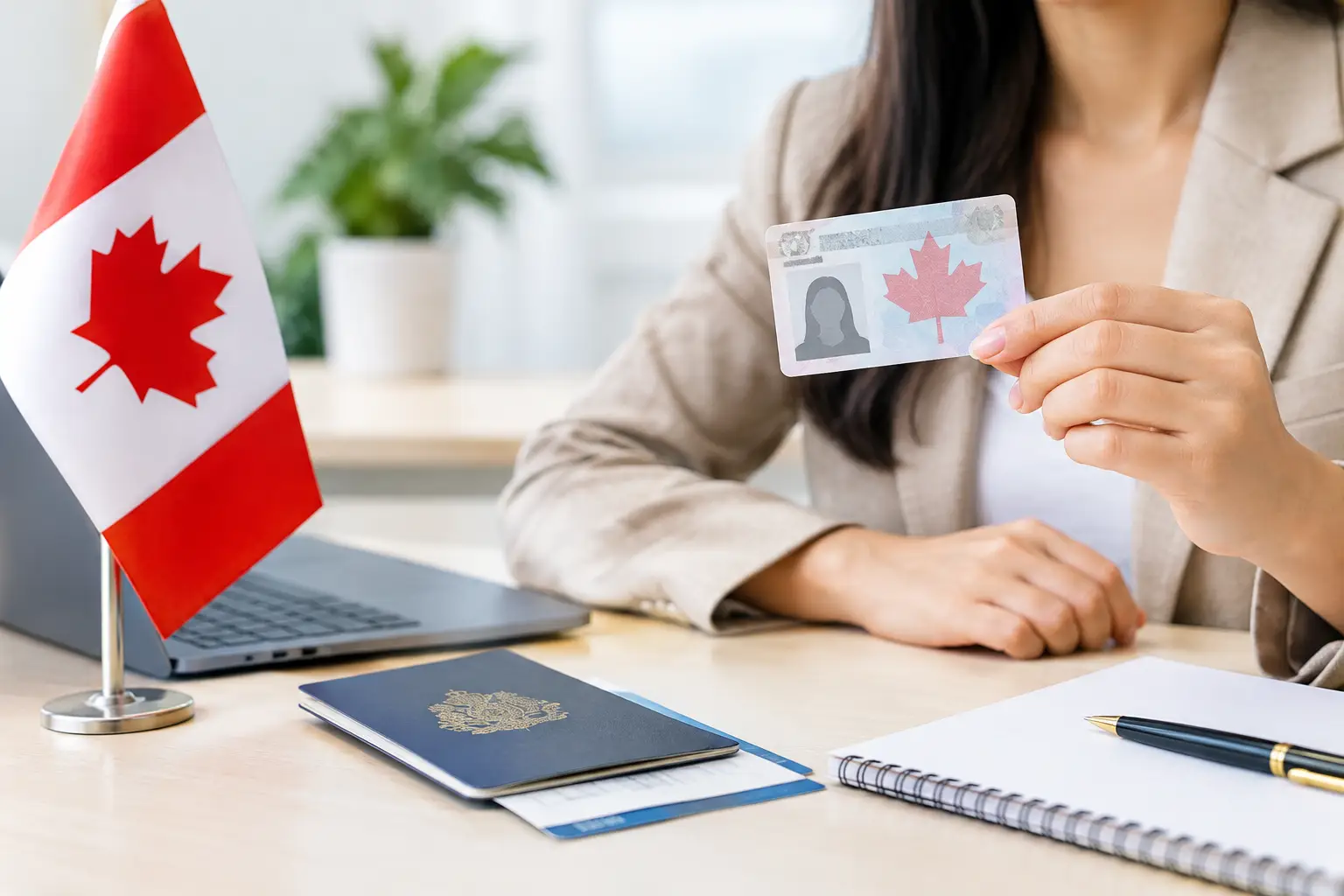
    Your PR card is proof of your Canadian permanent resident status for commercial travel. It is not the status itself. If the card expires, you do not automatically lose permanent resident status. However, an expired card can prevent you from boarding a flight, train, bus, or boat to Canada, and it can create avoidable complications when you need valid proof of status.

    Who can renew a PR card?

    In most cases, you can apply to renew your PR card if you are a permanent resident of Canada, are physically in Canada when you apply, and meet the residency obligation. You should generally apply when your card has expired or will expire within the next nine months.

    A renewal application is not simply an administrative update. Immigration, Refugees and Citizenship Canada (IRCC) may assess whether you have maintained your permanent resident status, especially if your travel history shows significant time outside Canada. This is why the form, dates, and supporting documents deserve careful attention.

    You may also need a PR card application if your card was lost, stolen, damaged, or never received. The core evidence is similar, but a lost or stolen card requires an explanation and may require additional details about what happened.

    PR card renewal requirements: the residency obligation

    For most permanent residents, the central requirement is having been physically present in Canada for at least 730 days during the five years immediately before the application is assessed. The 730 days do not need to be continuous. In practical terms, that means you can travel, work abroad, or spend time with family outside Canada, provided your qualifying days remain sufficient.

    If you became a permanent resident less than five years ago, the question is slightly different: can you still accumulate 730 days in Canada by the fifth anniversary of becoming a permanent resident? A person who has been a PR for three years, for example, may not yet have 730 days in Canada but may still meet the obligation if enough time remains to reach that total.

    Some time spent abroad can count toward the residency obligation. The rules are specific, and the evidence must support the exception. Qualifying situations can include time outside Canada while accompanying a Canadian citizen spouse or common-law partner, or as a dependent child accompanying a Canadian citizen parent. Time abroad may also count when working full-time for a qualifying Canadian business or public service, or when accompanying a permanent resident spouse, common-law partner, or parent who is employed in one of those qualifying roles.

    These exceptions are not automatic. A company’s Canadian registration alone may not be enough to establish that overseas employment qualifies. Similarly, family-based exceptions depend on the relationship, citizenship or PR status of the person you accompanied, and the facts of the travel. If your eligibility relies on time outside Canada, it is wise to assess the details before submitting the application.

    Documents to prepare before you apply

    A well-prepared application tells one consistent story: who you are, where you have lived, and how you have met the residency obligation. IRCC’s document requests can change, and the right documents depend on your circumstances, but applicants commonly need identity documents, current and expired passports or travel documents, and photographs that meet the current PR card specifications.

    Your travel documents are particularly important. They help IRCC compare the absences you list in your travel history against passport stamps, visas, and other records. Do not estimate dates if you can verify them. Review your calendar, airline confirmations, border records, work schedules, and entry stamps so that every absence from Canada is recorded accurately.

    You may also need documents that support your residence in Canada. Depending on the case, useful evidence can include employment letters and pay records, school enrollment documents, lease agreements, tax records, utility bills, provincial health coverage records, or documents showing family residence. The goal is not to submit every document you own. It is to provide relevant, readable evidence that supports the dates and facts in the application.

    If a document is not in English or French, it generally needs to be accompanied by a proper translation. The translation process has its own requirements, so do not rely on an informal translation from a friend or relative without confirming that it will be accepted.

    Keep your address and name history consistent

    Small inconsistencies can create delays. Make sure your addresses, work history, marital status, and travel dates align across the application and documents. If your name has changed since your last PR card, include the appropriate legal name-change evidence, such as a marriage certificate, divorce document, or court-issued record.

    If you no longer have your previous PR card, state that clearly and follow the applicable declaration requirements. Trying to avoid the issue or providing an incomplete explanation can cause more difficulty than the missing card itself.

    Apply from Canada and plan around travel

    A PR card renewal application should be made while you are in Canada. IRCC sends the new card to a Canadian address and may ask you to collect it in person. If you leave Canada after applying, your travel plans can become complicated if your current card expires before you return.

    If you are outside Canada without a valid PR card, you will usually need a permanent resident travel document, often called a PRTD, to return to Canada on commercial transportation. A PRTD application can also involve a residency obligation assessment. It is not a shortcut around an expired card, and processing time can affect travel plans.

    For that reason, avoid booking international travel based on the assumption that a renewed card will arrive by a particular date. Processing times can change, and urgent processing is limited to specific, documented situations. An urgent request is not guaranteed simply because travel is booked.

    The government fee for a PR card application is separate from any professional assistance and can change. Before filing, confirm the current fee, photo specifications, submission method, and document checklist directly through the applicable IRCC instructions.

    Common issues that can put a renewal at risk

    The most common concern is a residency shortfall caused by long absences, often after an applicant has been caring for relatives, working internationally, or living temporarily in another country. In these cases, applying without a clear strategy may expose a residency issue rather than resolve it.

    Another frequent problem is an incomplete travel history. Applicants sometimes list only major vacations and overlook brief work trips, weekend visits, or travel through the United States. The dates matter because even a few missing absences can affect the residency calculation.

    Documents can also raise questions when they do not match the story in the form. For example, a Canadian employment letter may not by itself prove physical presence in Canada if passport records show extended absences. Conversely, a person who qualifies through an exception for overseas employment needs evidence that addresses the specific legal criteria, not only proof that they had a job.

    If you are close to 730 days, have spent extended time abroad, received a residency-related notice, or need to return to Canada from outside the country, personalized advice can be especially valuable. This is where a careful review of dates and documents can help you understand the risks before you submit anything.

    A more confident way to prepare

    Start by building a complete five-year timeline. Mark every entry to and exit from Canada, then identify which periods count toward your residency obligation. Next, organize the documents that support your time in Canada or any qualifying time abroad. Finally, review the application for consistency before submitting it through the current IRCC process.

    At Novica Immigration, PR card renewal support can include a review of residency history, document organization, application preparation, secure document collection, submission guidance, and post-submission communication. The appropriate level of support depends on whether your case is straightforward or involves travel history, missing documents, time abroad, or potential residency concerns.

    A PR card renewal should give you practical proof of the life you have built in Canada, not become a source of uncertainty. Give yourself enough time to prepare carefully, especially when travel or a complex residency history is involved. You do not have to figure it out alone.

  • How to Prepare Citizenship Documents for Canada

    How to Prepare Citizenship Documents for Canada

    A Canadian citizenship application can feel deceptively simple until you begin gathering records from several years of life, travel, work, and family changes. To prepare citizenship documents well, start with the facts that support your eligibility, then build a file that is consistent across every form, upload, and supporting record. Careful preparation can reduce preventable delays and give you greater confidence before you submit.

    Citizenship is a meaningful final step for many permanent residents and their families. It also comes with specific legal requirements. A document checklist is not a substitute for confirming eligibility, especially if you have extensive travel, periods outside Canada, criminal or immigration history, a prior refusal, or a complicated name or family situation.

    Start With Eligibility Before Collecting Documents

    The documents you need depend on your age, how you apply, and your personal history. Before requesting records or scanning anything, confirm that citizenship is the right application at this time.

    Most adult applicants must have valid permanent resident status, meet the required physical presence threshold, have filed Canadian income taxes when required, and meet language and knowledge requirements if they are between ages 18 and 54. Applicants must also consider whether any prohibition could affect eligibility. For example, certain criminal matters, removal orders, or unfulfilled immigration requirements can change the analysis.

    Physical presence deserves particular attention. Your travel history must be accurate, not estimated from memory. Short trips to the United States, business travel, family visits, and same-day border crossings can all matter. Start creating a travel timeline early by reviewing passport stamps, airline confirmations, calendars, email receipts, employment records, and entry or exit information you may have retained.

    If you are close to the physical presence minimum, do not rush because a date seems likely. A small error in your travel history can have larger consequences than waiting until your calculation is clearly supported.

    How to Prepare Citizenship Documents in a Logical Order

    A strong citizenship file is organized around identity, status, presence in Canada, and any individual requirements. Rather than collecting documents randomly, work through those categories one at a time.

    Confirm your identity and permanent resident status

    Begin with clear copies of the identity documents requested in the current application package. This may include your passport or travel documents, permanent resident card, and other government-issued identification. Check that names, dates of birth, and document numbers are readable and consistent.

    Pay close attention to name differences. A maiden name, a changed surname after marriage or divorce, a missing middle name, or a spelling variation can be manageable, but it should be explained and supported. Depending on the situation, a marriage certificate, divorce document, legal name-change certificate, or other record may be needed to connect the names used throughout your immigration history.

    Expired passports can still be important. If they cover any part of the relevant eligibility period, they may help confirm travel and residence. Do not assume that only your current passport matters.

    Build a reliable travel history

    Your physical presence calculation and travel history must tell the same story. Record every absence from Canada during the applicable period, including departure and return dates. Keep a working spreadsheet or timeline for your own review, even if you later enter the information directly into an online application.

    Avoid guessing when a date is unclear. Look for evidence and resolve gaps before submission. If a passport has no stamp for a particular trip, airline records, hotel reservations, credit card activity, work calendars, and emails may help reconstruct the dates. The goal is accuracy, not a perfectly tidy travel history.

    For frequent travelers, this is often the most time-consuming part of the application. A consultant can help identify inconsistencies before they appear in the application, but the applicant remains the best source of the underlying travel information.

    Gather language evidence if it applies to you

    Applicants between ages 18 and 54 generally need acceptable proof of English or French language ability. The right document depends on your circumstances. It may be a qualifying language test result, a Canadian education credential, or another accepted record.

    Do not submit a document simply because it is written in English or because you attended school in Canada. It must meet the citizenship program’s specific standards. Check the current requirements before relying on a diploma, transcript, certificate, or test result, particularly if the record is older or was issued outside Canada.

    Review your tax filing history

    Citizenship applicants may need to show that they met their Canadian income tax filing obligations for the relevant years. In many cases, immigration authorities can verify information with the Canada Revenue Agency, but you should still review your own filing history before you apply.

    If you did not file for a year when you may have been required to file, resolve the issue before submission where possible. A gap does not always mean you are ineligible, since filing obligations depend on individual circumstances. Still, it is better to understand and address the question early than to be surprised by it after applying.

    Include family and child-specific records where needed

    A minor’s citizenship application can involve different requirements from an adult application. The documents may depend on whether the child applies with a parent, whether a parent is already a Canadian citizen or is applying at the same time, and who has legal authority to act for the child.

    For children, be ready to review birth certificates, custody or guardianship documents, adoption records where applicable, and identity documents. If parents live in different countries or one parent is not participating in the application, clarity around consent and decision-making authority matters. These are situations where individualized advice can prevent avoidable requests for more information.

    Make Every Copy Clear, Complete, and Consistent

    Document quality is not a minor administrative detail. A blurry passport page, cropped certificate, missing reverse side, or unreadable stamp can lead to questions that slow the application.

    Scan documents in color when possible and review every page at full size before uploading. Include all pages requested, not only the page that appears most relevant. Keep original documents in a secure place after scanning, because immigration authorities may ask to see them later.

    If a document is not in English or French, it generally needs a complete translation that meets the program’s requirements. Do not rely on an informal translation by a family member. The translation process may also require an affidavit or other supporting information, depending on who completed it and where. Plan extra time for this step, especially for civil records from abroad.

    Consistency matters just as much as legibility. Your address history, work history, travel dates, names, and family details should align with the application and with prior immigration records. If something has changed since you became a permanent resident, such as a marriage, separation, child, new passport, or address, make sure the application explains the current facts accurately.

    Use a Final Review Process Before Submission

    Before you submit, review the full application as if you were seeing it for the first time. Confirm that every question has been answered, dates follow the correct format, required declarations are completed, and uploaded files match the labels in the portal. Keep a copy of the final application, payment confirmation, and every document submitted.

    It is also wise to prepare for the period after filing. Citizenship applications can involve requests for additional documents, an interview, a citizenship test, or a ceremony invitation. Check your email and application account regularly, and update immigration authorities promptly if your contact information changes.

    For applicants with complicated travel patterns, prior immigration concerns, criminal charges or convictions, tax uncertainty, or a previous citizenship refusal, professional guidance can be particularly valuable. An RCIC-IRB can review the facts, explain the scope of representation, and help prepare a strategy based on your actual record. Novica Immigration approaches this work with clear expectations and honest advice, because no representative can guarantee an outcome.

    Citizenship is more than another form to complete. Give yourself time to collect accurate records, ask questions when the rules are unclear, and submit an application that reflects your life in Canada with care.

  • Provincial Nominee Program Eligibility Explained

    Provincial Nominee Program Eligibility Explained

    A Provincial Nominee Program can be a practical route to Canadian permanent residence, but provincial nominee program eligibility is not one universal checklist. Every province and territory sets its own priorities, and those priorities can change as labor-market needs, intake limits, and immigration policies evolve. The strongest strategy starts with identifying the stream that fits your real profile, not trying to force your profile into a stream that looks popular online.

    For many applicants, a nomination can make permanent residence more attainable. For others, it may require a job offer, recent study or work experience in a particular province, or proof that they can establish themselves there. Understanding those distinctions before preparing an application can save time, government fees, and considerable stress.

    What provincial nominee programs are designed to do

    Canada’s provinces and territories use Provincial Nominee Programs, often called PNPs, to nominate people who can contribute to their local economy and communities. A nomination is not permanent residence by itself. It is a provincial decision that supports your subsequent permanent residence application to the federal government.

    Some streams operate through Express Entry. If you receive an enhanced provincial nomination through that system and accept it, you receive 600 additional Comprehensive Ranking System points. This usually places you in a strong position to receive an invitation to apply for permanent residence.

    Other streams are base PNP streams. These are generally processed outside Express Entry and can be suitable for applicants who do not qualify for Express Entry or who have a better fit through a provincial employer, graduate, entrepreneur, or community-focused pathway. Processing procedures and timelines differ, so the right choice depends on eligibility, not simply on which route appears faster.

    Provincial nominee program eligibility starts with the right stream

    A province may have separate streams for skilled workers, international graduates, workers in in-demand occupations, healthcare professionals, entrepreneurs, and people with a connection to a specific community. There is no reliable rule that says a person with a certain job title or score will qualify everywhere.

    Your eligibility may turn on details that are easy to overlook. For example, an employer-driven stream may require a permanent, full-time job offer from an approved employer. A graduate stream may require you to have completed an eligible program in that province. A worker stream may require a minimum period of work experience with a local employer, while an Express Entry-aligned stream may require an active Express Entry profile and eligibility under a federal economic program.

    The province also needs to be satisfied that you genuinely intend to live there. This is a core issue. Canadian permanent residents have mobility rights, but at the nomination stage, your stated plan must be credible. A job offer, current employment, study history, family connections, housing arrangements, community research, and a clear settlement plan can all help demonstrate that intention.

    Common eligibility factors provinces assess

    Although requirements vary, most PNP streams assess a similar group of factors. The exact threshold, accepted evidence, and definition of a qualifying job can be different from one province to another.

    Work experience and occupation

    Many skilled-worker streams require experience in an occupation classified under Canada’s National Occupational Classification system. The duties you performed matter as much as the job title on your employment letter. Your reference letter should accurately describe the duties, hours, dates, wages, and employment status, supported where possible by pay records, tax documents, contracts, or other evidence.

    Some programs target occupations facing shortages. A role may be in demand today but removed from a targeted list later. Applicants should never assume that an occupation list or a previous draw result will remain in place when they apply.

    A qualifying job offer

    Not every PNP stream requires a job offer, but many do. Where one is required, it commonly must be full-time, non-seasonal, and supported by an employer that meets provincial standards. The employer may need to show that the business is actively operating, has adequate revenue or staffing, and has made reasonable efforts to recruit locally.

    A job offer that looks valid on paper can still create problems if the wage is below the regional standard, the duties do not match the claimed occupation, or the employer cannot provide the documents required by the province. Both the applicant and employer should understand their responsibilities before a profile or application is submitted.

    Language ability, education, and settlement funds

    Language requirements are stream-specific. Some pathways accept a lower Canadian Language Benchmark level than others, especially for certain occupations, while higher-skilled streams may require stronger English or French results. Language tests must be approved and valid on the relevant application date.

    Education can also be decisive. A provincial graduate stream may recognize only programs completed within a particular time frame or at a qualifying institution. If your education was completed outside Canada, you may need an Educational Credential Assessment for Express Entry or for the specific program you are pursuing.

    Some applicants must show settlement funds, particularly if they are not already working and residing in the province. The amount and accepted proof depend on the pathway. Bank statements should show that funds are available, transferable, and not temporarily borrowed simply to meet a balance requirement.

    Documents that make the application easier to assess

    PNP applications are document-heavy, and inconsistencies can lead to delays, refusals, or questions about credibility. A clean document plan is not about submitting every paper you have. It is about submitting clear evidence for every requirement.

    Most applicants will need some combination of the following:

    • Passport identity pages and current immigration status documents
    • Language test results and educational records or credential assessments
    • Detailed employment letters, pay records, contracts, and tax documents
    • A qualifying job offer and employer documents, where required
    • Proof of funds, family information, civil-status records, and certified translations when documents are not in English or French

    Names, dates, job titles, work hours, and addresses should align across forms and supporting documents. If something does not align because of a name change, a prior employer’s recordkeeping, freelance work, or another valid reason, explain it directly and support the explanation with evidence. Leaving an inconsistency unexplained can be more harmful than addressing it carefully.

    Express Entry nomination or a base PNP stream?

    An Express Entry-aligned nomination can be especially valuable for candidates who already qualify under the Federal Skilled Worker Program, Canadian Experience Class, or Federal Skilled Trades Program. It may offer a more direct federal processing route after nomination, but candidates must continue to meet Express Entry requirements throughout the process.

    A base stream can be a better fit when a province has selected you through a local job offer, a graduate pathway, or a targeted occupation stream without requiring Express Entry eligibility. The trade-off is that the federal permanent residence application follows a different process and may have different timing.

    Neither route is automatically better. A candidate with a strong local employer connection may have more realistic options through a base stream than through a general Express Entry draw. Conversely, a professional with a competitive Express Entry profile and provincial interest may benefit from pursuing an enhanced nomination.

    Avoid assumptions that can weaken a PNP case

    A provincial invitation or expression-of-interest selection is not final approval. You must still prove every claim in your profile. Inflating work experience, choosing a NOC code based on title rather than duties, or relying on an employer who is not prepared for verification can create serious consequences.

    It is also wise to plan for changing circumstances. A work permit may expire, language test results may become invalid, a job may change, or a province may pause a stream. Your application strategy should account for these deadlines rather than treating them as administrative details.

    If you have a prior refusal, periods without status, a complicated employment history, or family members who will be included in the application, individualized advice can be particularly useful. The goal is not to make a case sound more complicated than it is. It is to identify issues early and present accurate, complete information from the start.

    A well-prepared PNP application begins with an honest assessment of where you qualify today and what may be realistic after further work experience, language improvement, or a qualifying job offer. You do not have to figure out those decisions alone. Clear planning now can give your Canadian permanent residence application a more secure foundation.